Overview
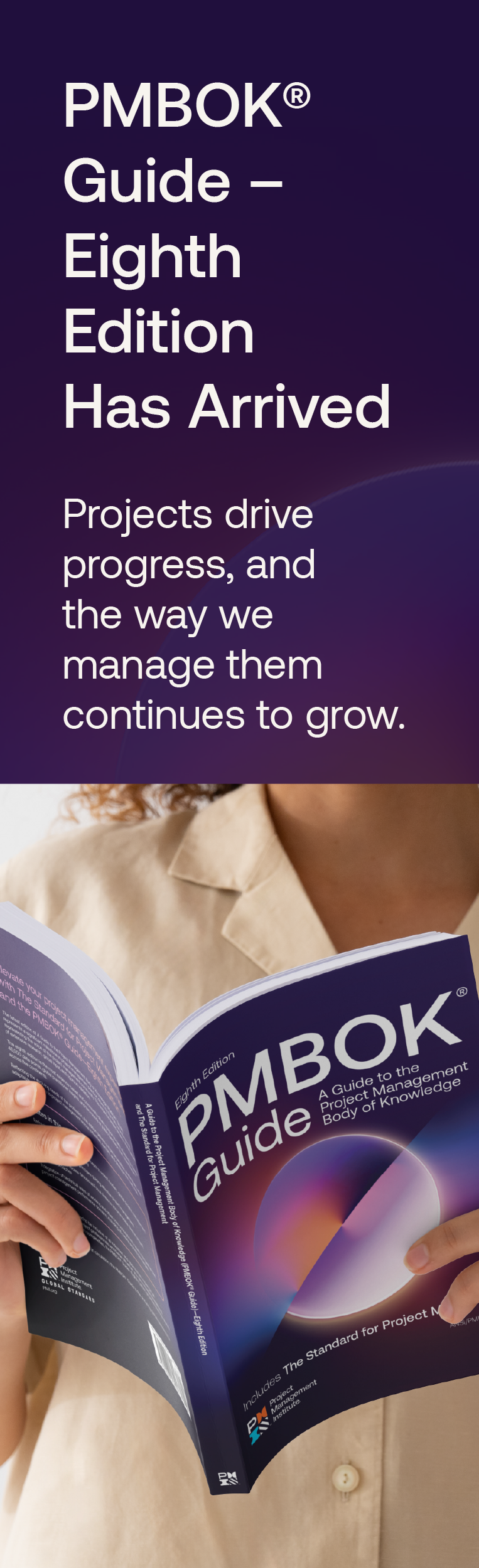
A Guide to the Project Management Body of Knowledge (PMBOK® Guide)— Eighth Edition and The Standard for Project Management represents the most data-driven and community-informed update in the guide’ s history.Developed through extensive global research and practitioner collaboration, it incorporates input from thousands of project professionals and more than 48,000 data points.Building on the long-standing legacy of PMI, the Eighth Edition blends mindset, technical, and practical guidance to reflect how project management is practiced today. It introduces:• Six core principles that influence effective project management behavior• Seven performance domains that represent key areas of practice• Expanded coverage of AI, PMOs, and procurement, with reintroduced process guidance presented in an evolved, non-prescriptive way.Together, these updates connect the why, what, and how of project management. With an emphasis on value delivery, adaptability, and accountability, this edition helps professionals at all levels achieve meaningful outcomes across a range of approaches and environments.Whether you manage traditional initiatives or lead agile transformations, the PMBOK® Guide – Eighth Edition provides clarity, relevance, and confidence for modern project delivery.What You’ ll Learn 1. Connect projects to organizational value Learn how to align project outcomes with strategic goals through a system for value delivery. 2. Apply six core principles for effective leadership Adopt a holistic view, focus on value, embed quality, lead accountably, integrate sustainability, and build empowered teams.3. Master the seven performance domains Strengthen your capabilities in governance, scope, schedule, finance, stakeholders, resources, and risk. 4. Tailor for your context Learn how to adapt practices, tools, and techniques to fit your team, organization, and environment.5. Explore new and emerging topics Gain insights into AI, PMOs, and procuremeAuthor Biography
PMI serves more than five million professionals including over 680,000 members in 217 countries and territories around the world, with 304 chapters and 14,000 volunteers serving local members in over 180 countries. Its services include the development of standards, research, education, publication, networking opportunities in local chapters, hosting conferences and training seminars, and providing accreditation in project management. PMI serves more than five million professionals including over 680,000 members in 217 countries and territories around the world, with 304 chapters and 14,000 volunteers serving local members in over 180 countries.Its services include the development of standards, research, education, publication, networking opportunities in local chapters, hosting conferences and training seminars, and providing accreditation in project management. PMI serves more than five million professionals including over 680,000 members in 217 countries and territories around the world, with 304 chapters and 14,000 volunteers serving local members in over 180 countries.Its services include the development of standards, research, education, publication, networking opportunities in local chapters, hosting conferences and training seminars, and providing accreditation in project management. PMI serves more than five million professionals including over 680,000 members in 217 countries and territories around the world, with 304 chapters and 14,000 volunteers serving local members in over 180 countries. Its services include the development of standards, research, education, publication, networking opportunities in local chapters, hosting conferences and training seminars, and providing accreditation in project management.